• 💪 Hello, please SIGN-UP FOR A FREE account and become a member of our community!
    You will then be able to start threads, post comments and send messages to other members. Thanks!
  • 🔥 Kits4Less.com #1 MOST LAB-TESTED SOURCE — 25% OFF YOUR FIRST ORDER! 🔥

Bible Thread

wrong.

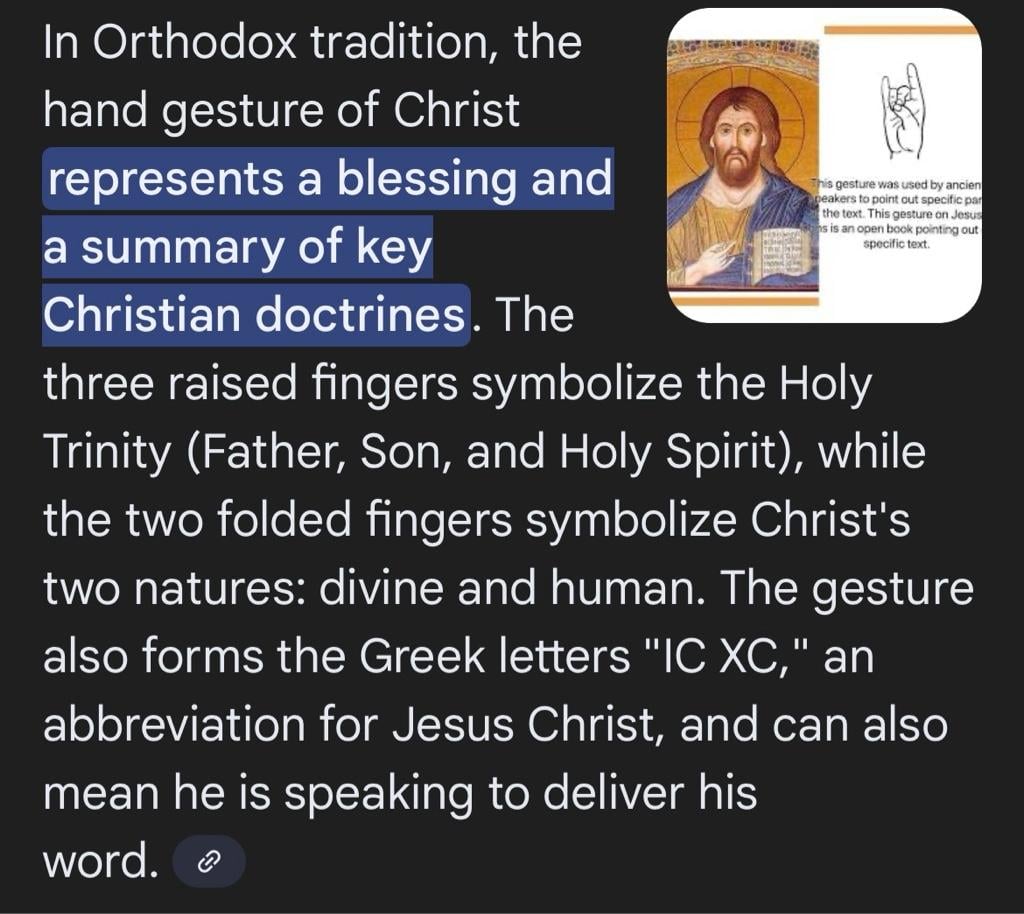
There is no hand gesture for the trinity. New age nonsense will get you into trouble

7c0edf66c09cd3050b56e1c744744224.jpg


Sent from my iPhone using Tapatalk
 
Why is this important? Many Christians believe if you do NOT believe Yeshua is Jehovah God then you cannot be saved.
The following logic took me years to discover. One day I was reading Romans 10:13 for like the hundredth time and realized what Paul was saying.

You cant see it in the English but its crystal clear in the Hebrew when you read Joel 2:32.

According to Romans 10:9-13, believing Jesus is "Lord" is a necessary part of salvation, which implies believing in his deity and his role as YHWH. This is because the passage equates calling on "the Lord" with calling on the name of YHWH, and identifies this "Lord" with Jesus. The key requirement is to confess with your mouth that Jesus is Lord and believe in your heart that God raised him from the dead.

Confession and belief: Salvation comes from confessing with your mouth that Jesus is Lord and believing in your heart that God raised him from the dead.

LORD implies deity: Some interpretations explain that the term "Lord" (Greek: kurios) is used for Jesus, but also for the Old Testament God, YHWH. This connection is made because Romans 10:13 quotes Joel 2:32, which says, "everyone who calls on the name of the LORD (YHWH) will be saved". Since Paul applies this to Jesus, the understanding is that he is equating Jesus with YHWH. YHWH is Jehovah/Yahweh.

Calling on the LORD: The passage concludes that "everyone who calls on the name of the Lord will be saved". Since the "Lord" in this context is Jesus, this means that calling on Jesus by name is what leads to salvation.

In other words, Yeshua is Jehovah/Yahweh and you must acknowledge Him as God and believe in the resurrection to be saved.

1763435527625.png
 
If you read Hebrew’s it lays it out really well too


Sent from my iPhone using Tapatalk
 
God Morning to my bros, sons and daughters of God ❤️

Did you know today that by His finished work at the cross Jesus made us sons and daughters to the Father just like Him, literally joint heirs, we are no longer servants, we literally walk with Him daily in the garden of our lives, He is with you right now as you read this and as I write this

What and amazing way to start the day... knowing that the Creator made a way when there was no way just so we could wake up, walk and talk with HIM everyday on earth and ofc eternally as well.

Ephesians
Now to Him who is able to [carry out His purpose and] do superabundantly more than all that we dare ask or think [infinitely beyond our greatest prayers, hopes, or dreams], according to His power that is at work within us,to Him be the glory in the church and in Christ Jesus throughout all generations forever and ever. Amen.

We give you Jesus the glory the honor and the praise everyday💪

View: https://youtu.be/9NLnlPs-m58?si=xvbwHbAxJ6wgIvfK
 
To my buddies of faith...

I heard an interesting argument on how The Old and New Testament are like operating systems where The New Testament would be equivalent to a 2.0 version.

I saw Christians arguing back and forth on this pretty viscously. Of course, I have my opinions but more interested in some of your takes.

Thoughts?
firstly I hate when christians argue over things God related... I can not stand religion, I despise it, so a lot of people strongly disagree with me on that, but how do you argue over OT versus NT the new convent is so far superior, was the OT guy a jew or something?

to entertain the questioning I’ll stick with metaphor
I would put it more like this ...
Old covenant was fulfilled.
A new convent was created and fulfilled by the covenant Creator. its more like going from dos to a 1,000,000,000.0 haha
 
A new convent was created and fulfilled by the covenant Creator. its more like going from dos to a 1,000,000,000.0 haha
The problem I see with that metaphor is DOS was simply built upon without excluding any previous data. The Old Testament was filled with data that in many cases contactants the New Testament upgrade. Significantly. Do Christians disregard the Old Testament in that case? If so, that seems like a large issue on the validity in general.

Just trying to understand in seeing all sides.
Would you expand on this question/concept. I think I understand but an example would be helpful.
 
I digress MK, I feel religion coming on and thats a topic I do not enjoy discussing, I'll leave that for heavy, he is your guy
I think most Christians shy away from the apparent contradictions. (I'm not saying you do). Before I took seminary level classes, I merged almost every contradiction together in my mind or explained them away. Keep in mind I had about 5 1/2 years of formal Bible training at this point. If someone brought up a works-based passage, I would point out a faith alone passage. I would then try to explain away the works-based passage. Pretty much every Christian does this. The majority of believers believe in faith works for salvation. We who believe in faith alone are the minority. Why is that if we use the same Bible?

My second semester I had a class that highlighted all these apparent contradictions It was fascinating because the teacher did not try to explain them away. He used the passages to show how the "house rules" changed over time. We studied the reasons for the changes. It was a highly literal look at these passages. He did not use allegory almost ever.

I think pitting to OT against the NT or pitting older covenants against the new is a misunderstanding of all the changes (not saying you do this either). One could argue for up to 7 different covenants. (Abrahamic, Palestinian, Mosaic, Davidic, New, etc.) One could also argue that the house rules changed in the OT numerous times and also in the NT.

I think the key is understanding who is being spoken to or about in each passage. Many Christians read a scripture and automatically apply it to themselves. The Bible says to build an ark. Should we build an ark? The Bible says to offer up your firstborn son? Should we do that? The Bible says we are to offer an animal sacrifice. Should we? These are obvious but what if there are commands or instructions that are not so obvious? Where do we draw the line? Where is the distinction? Should we keep the Sabbath? Should we circumcise? Do we have dietary laws? Should we keep the feast days? What about ceremonial washings? Christ did all of these things. Shouldn't we follow Him?

Anyway, not trying to be religious. Just trying to understand the One who made us.
 
Just trying to understand in seeing all sides.
You're not here to understand anything.

Didn't you just post to someone that you were tired of them arguing for the sake of arguing?

Quite contradictory of you. Have you stopped to think why you've gotten a hard time here recently?
 
I think most Christians shy away from the apparent contradictions. (I'm not saying you do). Before I took seminary level classes, I merged almost every contradiction together in my mind or explained them away. Keep in mind I had about 5 1/2 years of formal Bible training at this point. If someone brought up a works-based passage, I would point out a faith alone passage. I would then try to explain away the works-based passage. Pretty much every Christian does this. The majority of believers believe in faith works for salvation. We who believe in faith alone are the minority. Why is that if we use the same Bible?

My second semester I had a class that highlighted all these apparent contradictions It was fascinating because the teacher did not try to explain them away. He used the passages to show how the "house rules" changed over time. We studied the reasons for the changes. It was a highly literal look at these passages. He did not use allegory almost ever.

I think pitting to OT against the NT or pitting older covenants against the new is a misunderstanding of all the changes (not saying you do this either). One could argue for up to 7 different covenants. (Abrahamic, Palestinian, Mosaic, Davidic, New, etc.) One could also argue that the house rules changed in the OT numerous times and also in the NT.

I think the key is understanding who is being spoken to or about in each passage. Many Christians read a scripture and automatically apply it to themselves. The Bible says to build an ark. Should we build an ark? The Bible says to offer up your firstborn son? Should we do that? The Bible says we are to offer an animal sacrifice. Should we? These are obvious but what if there are commands or instructions that are not so obvious? Where do we draw the line? Where is the distinction? Should we keep the Sabbath? Should we circumcise? Do we have dietary laws? Should we keep the feast days? What about ceremonial washings? Christ did all of these things. Shouldn't we follow Him?

Anyway, not trying to be religious. Just trying to understand the One who made us.
Great response. Thank you.
You're not here to understand anything.

Didn't you just post to someone that you were tired of them arguing for the sake of arguing?

Quite contradictory of you. Have you stopped to think why you've gotten a hard time here recently?
I asked a legitimate question that I found interesting and wanted the input from a few guys I respect and get along with that are believers. I didn't give my opinion and thanked the guy for the response. If you have a problem with me, cool. I don't give af. lol Put me on ignore if you want. Life is too short for shit like this.
 
Great response. Thank you.

I asked a legitimate question that I found interesting and wanted the input from a few guys I respect and get along with that are believers. I didn't give my opinion and thanked the guy for the response. If you have a problem with me, cool. I don't give af. lol Put me on ignore if you want. Life is too short for shit like this.
If you're not here to mock Christians, why are you responding with the laughing emoji to posts?

Legitimate question, as well
 
I don't like that you're trying to lead people away from God. Your arrogance is off-putting, I will admit. But I don't dislike you. You want to respond as you please, but don't like anyone to question you, I've noticed.

As a follower of Christ, maybe I'm going about this the wrong way. But I'll ask one more question and you can answer if you like, or not.

Did you have a religious upbringing?
 
Here are the main Old Testament characters who physically traveled to Egypt (or were taken there) and left a noticeable influence—cultural, religious, political, or spiritual—on Egypt or its people. I’ve included only those whose presence in Egypt is explicitly described in the canonical Hebrew Bible and who demonstrably affected Egyptians or Egyptian society. Estimated dates are based on the most commonly accepted scholarly ranges (early-date and late-date chronologies combined).

CharacterReason for going to EgyptApproximate dates (BCE)Nature of influence on Egyptians / Egypt
AbrahamFamine in Canaan (Gen 12)2100–2000 (early) or ~1900–1800Brief visit; lied about Sarah → Pharaoh took her → plagues sent by God → Pharaoh acknowledges Yahweh’s power and sends Abraham away rich (first recorded instance of God judging Egypt for Israel’s sake)
JosephSold into slavery by brothers (Gen 37–50)1900–1800 (early) or ~1700–1600Rose to second-in-command; saved Egypt from 7-year famine; centralized power under Pharaoh; brought entire family (Israel) to Egypt; Egyptians end up selling land to Pharaoh, becoming serfs
Jacob (Israel)Famine; invited by JosephSame period as JosephPatriarch of the tribes; his burial instructions and blessing indirectly shape the later Israelite identity in Egypt
MosesFled after killing Egyptian (Exod 2); later returned leading Exodus (Exod 3–15)1520–1400 (early) or 1300–1250Plagues devastate Egypt; destroys Egyptian army in Red Sea; forces Pharaoh to “know that I am Yahweh”; first five books of Bible traditionally attributed to him circulate later in Hellenistic Egypt
Jeroboam (I)Fled from Solomon, received asylum from Pharaoh Shishak (1 Kings 11:40; 12:2)~945–925Shishak (likely Shoshenq I) later invades Judah (c. 925 BCE), possibly encouraged by Jeroboam’s presence and information
Hadad the EdomiteFled David’s massacre as a child; raised at Pharaoh’s court (1 Kings 11:14–22)~1000–950Married Pharaoh’s sister-in-law; his son raised in Pharaoh’s household; becomes adversary to Solomon
JeremiahTaken forcibly by Jewish refugees after fall of Jerusalem (Jer 43)586–580Prophesies against Egypt (Jer 46); predicts Nebuchadnezzar’s conquest; Jewish community in Egypt (e.g., Elephantine) preserves his influence centuries later
Joseph’s brothers & tribes of Israel (collectively)Famine → settled in GoshenSame as Joseph400+ years of growing Israelite population; eventually seen as threat → enslavement → Exodus cataclysm affects entire nation

Narrower count of individuals with clear, direct influence​

If we are strict (traveled to Egypt themselves + demonstrable, named influence on Egyptian people or rulers), the strongest cases are:
  1. Abraham (~2100 or ~1900 BCE) – temporary but theological (plagues on Pharaoh’s house)
  2. Joseph (~1900–1800 or ~1700–1600 BCE) – massive political/economic restructuring
  3. Moses (~1520–1400 or ~1300–1250 BCE) – catastrophic religious/political/military impact
  4. Jeroboam (~945 BCE) – political (helped provoke Shishak’s campaign)
  5. Hadad the Edomite (~1000–950 BCE) – minor political adversary, royal family ties
  6. Jeremiah (~586 BCE) – prophetic/oral influence on Jewish diaspora in Egypt
  • So 5–6 individuals, depending on how much weight you give Hadad and Jeroboam.
Virtually every major era of Egyptian history that intersects with biblical history (Middle Kingdom, New Kingdom, and Saite/Third Intermediate/Late Period) has at least one major Hebrew figure who spent significant time in Egypt and left a mark remembered both in Scripture and (in several cases) detectable in Egyptian archaeology or later Egyptian Jewish tradition.
 
The alleged similarities between Christ and the Egyptian god Horus are largely considered by historians and Egyptologists to be inaccurate or based on misinterpretations and fabrications of ancient myths, not an accepted fact. The idea that the Jesus story is a retelling of the Horus myth is a modern theory, often circulated online, that is not supported by scholarly consensus.

Common Alleged Similarities (and Scholarly Rebuttals)

Claims of similarities largely originated from 19th-century amateur scholarship and popular media like the film Zeitgeist, but they do not hold up under scrutiny of original historical and mythological texts.

Virgin BirthBoth were born of a virgin (Horus' mother was Isis, sometimes called "Meri" in later contexts).Isis was the wife of Osiris and conceived Horus by magic after his murder, having sex with his reassembled corpse; she was not a virgin in the biblical sense.
Born on Dec. 25thBoth were born on December 25th.The date of Jesus' birth is unknown and was not recorded in the Gospels; there is no evidence that December 25th was the date of Horus' birth in ancient Egyptian mythology.
12 DisciplesHorus had 12 disciples or followers.Horus had four primary followers (sometimes sixteen at a special battle); the number of followers varied in different accounts, but never a fixed 12 like Jesus.
BaptismHorus was baptized by a figure named "Anup the Baptizer" who was later beheaded.There is no character named "Anup the Baptizer" in Egyptian mythology; this name and story were invented for the Zeitgeist film.
MiraclesBoth performed miracles such as walking on water and raising the dead.While Horus was a god and thus magical, there are no stories in primary Egyptian texts of him walking on water, raising the dead (Osiris was raised to be king of the underworld, but not in the same way), or casting out demons.
Crucifixion/ResurrectionBoth were crucified between two thieves and resurrected in three days.There are no myths in which Horus was ever crucified; crucifixion was a Roman form of execution, not an ancient Egyptian practice. The story of Osiris' rebirth after being dismembered is a cyclical motif, different from Jesus' singular resurrection.
TitlesBoth were called "the Way, the Truth, the Life," "the Light of the World," "the Good Shepherd," and "the Anointed One" (Krst).These specific titles for Horus are not found in ancient Egyptian texts; "Messiah" (Anointed One) is a Hebrew concept rooted in Jewish tradition, not an Egyptian one.

Conclusion
While some very general themes are common in many ancient myths (e.g., divine parentage, miraculous conception, a hero's journey), the supposed direct parallels between the specific life events of Jesus and Horus are unfounded in historical sources. The stories of Jesus are firmly rooted in a specific historical and Jewish context, and the alleged similarities to the Horus myth are generally dismissed as pseudoscholarship by experts in the fields of Egyptology and biblical studies
 
Last edited:
So did the Egyptians influence the Hebrews or was it the other way around?

Joseph was second in command in Egypt and likely brought many Hebrew concepts to them. Abraham and Moses likely also influenced them too.
 
1 Chronicles 16:30"He has fixed the earth firm, immovable."
Psalm 93:1"The world is established; it cannot be moved."
Psalm 96:10"He has fixed the earth firm, immovable."
Psalm 104:5"He set the earth on its foundations, so that it should never be moved."
Isaiah 45:18"He made the earth and fashioned it; he himself fixed it fast."
Genesis 1
In the beginning God created the heavens and the earth.Now the earth was formless and empty, darkness was over the surface of the deep, and the Spirit of God was hovering over the waters.
And God said, “Let there be light,” and there was light. God saw that the light was good, and he separated the light from the darkness. God called the light “day,” and the darkness he called “night.” And there was evening, and there was morning—the first day.

Psalms 19:4-5-6
Their line is gone out through all the earth, and their words to the end of the world. In them hath he set a tabernacle for the sun, Which is as a bridegroom coming out of his chamber, and rejoiceth as a strong man to run a race.His going forth is from the end of the heaven, and his circuit unto the


1 chronicles 16:30
Fear before him, all the earth: the world also shall be stable, that it be not moved.

Joshua 10:12
Then spake Joshua to the Lord in the day when the Lorddelivered up the Amorites before the children of Israel, and he said in the sight of Israel, Sun, stand thou still upon Gibeon; and thou, Moon, in the valley of Ajalon.
And the sun stood still, and the moon stayed, until the people had avenged themselves upon their enemies. Is not this written in the book of Jasher? So the sun stood still in the midst of heaven, and hasted not to go down about a whole day.And there was no day like that before it or after it

Isaiah 38:7-8
And this shall be a sign unto thee from the Lord, that the Lord will do this thing that he hath spoken;
Behold, I will bring again the shadow of the degrees, which is gone down in the sun dial of Ahaz, ten degrees backward. So the sun returned ten degrees, by which degrees it was gone down.

John 14:26, it is stated that the Holy Spirit, also called the Advocate, will teach believers all things and remind them of Jesus' teachings. This emphasizes the Spirit's role in guiding and instructing individuals in their faith.

The Holy Spirit is Who brings scripture to remembrance is described was...
The Holy Spirit is described as the Spirit of truth, guiding believers into all truth (John 16:13).

Isaiah 55:11
so shall My word be that goeth forth out of My mouth: It shall not return unto Me void, but it shall accomplish that which I please, and it shall prosper in the thing whereto I sent it.

Job 38:4​

“Where were you when I laid the foundation of the earth? Tell me, if you have understanding.


Ecclesiastes :5
The sun rises, and the sun goes down, and hastens to the place where it rises.

Job 9:6
Who shakes the earth out of its place, and its pillars tremble;

1 Samuel 2:8
He raises up the poor from the dust; he lifts the needy from the ash heap to make them sit with princes and inherit a seat of honor. For the pillars of the earth are the Lord's, and on them he has set the world.

Numbers23:19
God is not a man, that he should lie; neither the son of man, that he should repent: hath he said, and shall he not do it? or hath he spoken, and shall he not make it good?

Titus
In hope of eternal life, which God, that cannot lie, promised before the world began;


heres a glimpse of what science says would happen ... just google it and read, yet God said it did happen...

If Earth were to suddenly stop rotating, the immediate consequences would be catastrophic.

Physical Disruptions​

  • Momentum Effects: Everything not anchored to the ground would continue moving at about 1,000 mph (1,600 km/h) at the equator. This would cause massive destruction as buildings, trees, and people would be flung outward.


I think pitting to OT against the NT or pitting older covenants against the new is a misunderstanding of all the changes (not saying you do this either). One could argue for up to 7 different covenants. (Abrahamic, Palestinian, Mosaic, Davidic, New, etc.) One could also argue that the house rules changed in the OT numerous times and also in the NT.

I think the key is understanding who is being spoken to or about in each passage. Many Christians read a scripture and automatically apply it to themselves. The Bible says to build an ark. Should we build an ark? The Bible says to offer up your firstborn son? Should we do that? The Bible says we are to offer an animal sacrifice. Should we? These are obvious but what if there are commands or instructions that are not so obvious? Where do we draw the line? Where is the distinction? Should we keep the Sabbath? Should we circumcise? Do we have dietary laws? Should we keep the feast days? What about ceremonial washings? Christ did all of these things. Shouldn't we follow Him?

Anyway, not trying to be religious. Just trying to understand the One who made us.

I agree, I also disagree, I’ll clarify... Psalms 91 can be used today, Jeremiah 33:3 can and should be spoken today as well asm many others.

However, I agree some can only be understood in context, especially those pertaining to works based salvation, there is no in-between and thats crystal clear biblically, yet almost every church I've ever been to teaches that salvation is a gift you can lose it if your dont do something for it after you receive it...


I think most Christians shy away from the apparent contradictions. (I'm not saying you do). Before I took seminary level classes, I merged almost every contradiction together in my mind or explained them away. Keep in mind I had about 5 1/2 years of formal Bible training at this point. If someone brought up a works-based passage, I would point out a faith alone passage. I would then try to explain away the works-based passage. Pretty much every Christian does this. The majority of believers believe in faith works for salvation. We who believe in faith alone are the minority. Why is that if we use the same Bible?
Those believers are not set free and in bondage because they are not yet perfected in Gods love, His love
My second semester I had a class that highlighted all these apparent contradictions It was fascinating because the teacher did not try to explain them away. He used the passages to show how the "house rules" changed over time. We studied the reasons for the changes. It was a highly literal look at these passages. He did not use allegory almost ever.

I think pitting to OT against the NT or pitting older covenants against the new is a misunderstanding of all the changes (not saying you do this either). One could argue for up to 7 different covenants. (Abrahamic, Palestinian, Mosaic, Davidic, New, etc.) One could also argue that the house rules changed in the OT numerous times and also in the NT.

I think the key is understanding who is being spoken to or about in each passage. Many Christians read a scripture and automatically apply it to themselves. The Bible says to build an ark. Should we build an ark? The Bible says to offer up your firstborn son? Should we do that? The Bible says we are to offer an animal sacrifice. Should we? These are obvious but what if there are commands or instructions that are not so obvious? Where do we draw the line? Where is the distinction? Should we keep the Sabbath? Should we circumcise? Do we have dietary laws? Should we keep the feast days? What about ceremonial washings? Christ did all of these things. Shouldn't we follow Him?

Anyway, not trying to be religious. Just trying to understand the One who made us.
 
Last edited:
He dwells within "RESURRECTION POWER” is inside you 💪

Some of the Pharisees (regions people) asked Jesus, “When will the kingdom of God come?”

Jesus answered, “God’s kingdom is coming, but not in a way that you will be able to see with your eyes. People will not say, ‘Look, here it is!’ or, ‘There it is!’ because God’s kingdom is within you.”

View: https://youtu.be/qzUFxJbNgBc?si=FkllNXzc-5C8Vx3F
 
Guys slightly off topic.

Did you see that a new charter occured in the Red Sea. In the 80s a guy named Ron Wyatt claimed to have found evidence of the parting of the red sea. People laughed him off.

Just this week a crew that was non religious took up the claims and finished a weeks long expedition. They found bones of humans and horses. They found chariots. They found swords. They found the so called Gold Chariot all in shallower waters in a land bridge area, underwater but apparently this land bridge goes all the way across the divide.

Therefore they proved that the red sea events did indeed happen with Moses. This is an amazing finding and absolutely proves that this Biblical "story" indeed did happen.
 
Love this thread.

Happy Holidays to you all 🙏🏼
 
I'm reading Proverbs this week.

Awesome ethical information within..it speaks to me. How did I miss this book this far?!
 
I'm reading Proverbs this week.

Awesome ethical information within..it speaks to me. How did I miss this book this far?
God showed me to use proverbs like I use workout supplements so I could relate to Him, when i first was born again He told me 1 chapter a day in the morning, just like a protein shake

theres 31 chapters. You will become wiser than you can imagine brother, the Holy Spirit will teach you amazing and wonderful things though proverbs. I read 1 chapter a day for years in my truck outside my job before they opened where it was dark and quiet and I was alone and I still refer to proverbs all the time ... I read the bible in my truck alot, its quiet and I can be alone, totally unplugged.

at that time i made $54 a day and slept on my pastors couch, I installed fireplaces/helper and it was some tough work man, up @3:30 am everyday haha

edit: Im so thankful that God showed you proverbs, integrity, character, and discernment +++ come from proverbs. Solomon who wrote proverbs was the wisest and wealthiest man to ever live
 
Last edited:
I spoke to an elderly 88 year old man about God and spirituality. His wisdom said to me that regardless of belief, we are all here to provide a purpose to others. Spirit is what we share and some Spirits are meant to bring together and others to destroy.

With that being said, there is really more to life than the external validations and successes. I’m grateful my dad raised me to seek wisdom from others.

I’d be fucked if I didn’t. So bless you all today and may your labor bear plentiful fruit. Amen.
 

Latest threads

Back
Top